Dive Destinations
Verified dive centers and liveaboards across the world’s best waters — pick a country and start planning.
Samoa
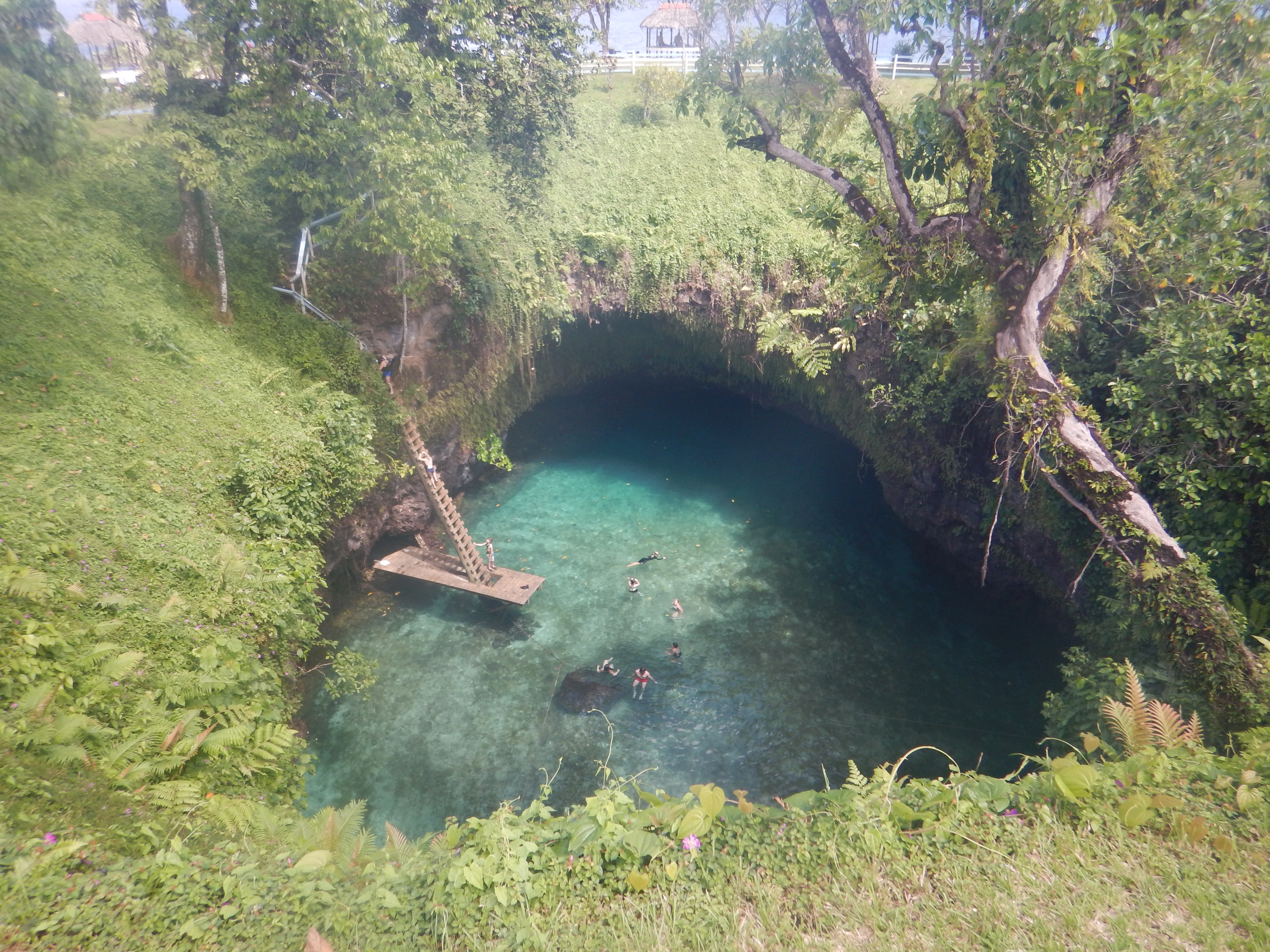
What to see in Samoa? To Sua Ocean Trench on Upolu's south coast, a giant lava-formed swimming hole reached by a wooden ladder; the lava fields left across Savai'i by Mount Matavanu's eruptions of 1905-1911; and the underwater lava tubes and swim-throughs where reef sharks and turtles are a near-daily sighting.
Diving in Samoa
Diving around Upolu and Savai'i runs over volcanic drop-offs, swim-throughs and a network of underwater lava tubes rather than the classic coral wall. Apolima Gardens off Upolu drops from 8 to 40 meters and holds lobsters, unicorn fish, blue fin trevally, reef sharks and turtles, while The Rock is known for napoleon wrasse, barracuda and tuna passing over sandy volcanic terrain.
Turtle Minefield, a maze of canyons and swim-throughs on Upolu's coast, is close to a guaranteed turtle encounter at any time of year. Off Savai'i, in Lelapa Bay, the Juno wreck - a three-mast missionary sailing ship that sank in 1881 - now shelters parrotfish, yellow snappers, jacks and stingrays under a coat of coral growth. Courses and check-out dives run year-round through the usual PADI network, with reef sharks, eagle and stingrays, and green turtles turning up on most sites.
Country
Samoa is a Polynesian island nation made up of two main islands, Upolu and Savai'i, plus several smaller islets. The population is around 205,600, with almost three-quarters living on Upolu, home to the capital, Apia. Samoan and English are both official languages, and the currency is the Samoan tālā.
Both main islands are volcanic in origin; Savai'i is the larger of the two and still has active volcanic ground, most visibly in the lava fields around Saleaula left by Mount Matavanu's eruptions in the early 20th century. The climate is equatorial and warm year-round, averaging around 26.5°C, with a rainy season running from November to April.
Germany colonized the islands in 1900, and New Zealand took over administration after the First World War. Samoa became independent on 1 January 1962, the first Pacific island nation to do so in the 20th century, and dropped 'Western' from its name in 1997. Fa'a Samoa, the traditional Samoan way of life built around extended family and village chiefs, still shapes daily life today.
Most biggest airports
Faleolo International Airport (APW), 40 km west of Apia on Upolu - the main international gateway to Samoa.
Maota Airport (MXS), Savai'i - the island's domestic airport, connected to Upolu.